


Retrospective #2 - Dragonscale


Today marks our official second demise (and our first assimilation), of a main character who is very dear to me.
If you’ve never read our retrospectives before, you can start with this one.
I love writing these, but they’re never easy. This one might be one of the hardest I’ll ever have to put together. Most of my characters are personal to me in some way, but Dragonscale especially so.
In this blog post I’m going to talk about drug abuse, so be aware of that.
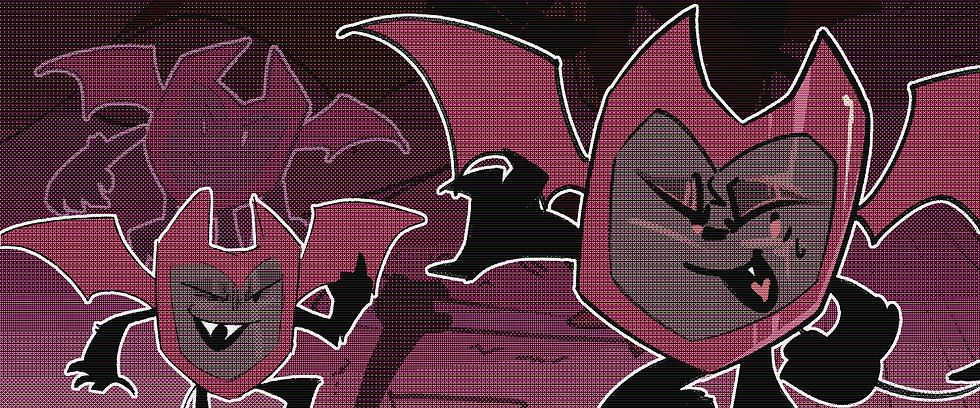
Dragonscale, like most of Objectified’s main cast, was conceived during the short-lived production of Super Gwa Gwa Show before it was canned.
A dragon’s scales aren’t especially sentimental to me, nor are dragons themselves. If I recall correctly, the character concept and design were decided on a whim to help fill out the more “bestial” side of the main cast. I wanted to make a few characters who could fly.
Her purpose in SGGS was to act as an opposition to Gum, catching her eye with a feisty nature comparable to Razor’s. She was meant to lead Gum on and distract her further from her team throughout the competition, up until Dragonscale herself was voted out. She would then reunite with her wife, revealing that she never really cared about Gum in the first place.
Dragonscale’s wife was a canine tooth named Fang. She was shaped like a pepper, so I redesigned her around that idea when bringing her into Objectified. A spicy pepper felt more fitting as Dragonscale’s partner once I started working on the comic. Turning her into Ghostpepper also opened up the idea of giving her “hair”, which I can’t imagine her without now.
Dragonscale and I, unfortunately, have a lot in common.
When I started work on Objectified, I was careful to only touch on sensitive topics I had personal experience with (save for the tension between divorced parents). That was less out of concern for offending anyone and more because I figured the writing would be stronger that way. I’m at least happy to say that I think Dragonscale’s part was handled well.
Of course, they are a dramaticized version of my experiences. I have not killed anybody (yet), but their thoughts, feelings, and habits were meant to mimic some of my own. This is why the episode description for Humidity is “parallel”.
Dragonscale reflected not only my drug problem at the time but also my insecurities about being a childish adult. One of the things that stuck with me most was people saying I was immature and spoke like a teenager, because they were kind of right. After what happened, I also wanted to stop depending on relationships for guidance or security, even though I still craved both.
The “mourner’s cradle” was the space and time between the aisles that Dragonscale spent trying to remember what it felt like to have Ghostpepper by her side. In Objectified, Gum still humors Dragonscale, but the dynamic is somewhat reversed. We learn that Gum’s restraints were loose the whole time. Dragonscale still intrigues her, but in this version of the story, Gum’s interest is purely investigative.
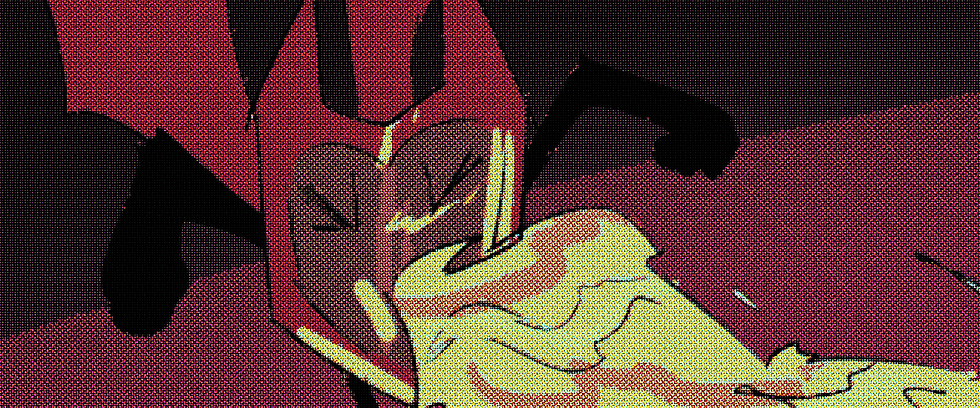
Weed was something I had barely touched in my life up until SGGS was canceled, after somebody spread rumors about me back in 2021. I remember one of their claims being that I was a huge stoner and drug addict, when in reality I owned a single D9 disposable that a friend had given me as a gift the year before. I had never even stepped foot in a smoke shop. I used that stick sometimes so I could have more fun eating Taco Bell during quarantine.
Ironically, it wasn’t until after that claim that I developed an actual drug abuse problem.
During the weeks I spent sulking after SGGS was officially canceled, I learned via a YouTube sponsorship segment that cannabinoids could just be ordered online. The website didn’t even check IDs. The YouTuber who introduced me to this website immediately took her video down and re-uploaded it without the sponsorship, but it was too late for me.
I remembered the first time I’d ever gotten high and how it gave me a goldfish brain, which had suddenly become invaluable because I couldn’t stop thinking about what had happened to me. My mind could just truck along past those harrowing thoughts, and within a few seconds I’d forget what I had even been agonizing over. It was perfect.
In fact, I can’t overstate how badly I needed a break from thinking. I couldn’t be away from a screen for more than a few minutes without feeling a burning pit in my stomach, and my mind was always racing. Making something in the kitchen, driving somewhere, and even taking a shower started to feel daunting because I would replay everything that had happened and obsess over what I could possibly do about it. No solution ever felt “perfect” enough, and that tortured me.
In the first couple of years I used it, weed inspired me to make more colorful and abstract personal art. I wasn’t high all the time, but that eventually changed. Admittedly, I was on it even while coloring the very first episode of Objectified. I remember being less confident while stoned back then, nervously showing a few friends the panels where the bar lights hit the sidewalk and asking, “Is this how light works?”
The first (and last) time I tried drafting an episode while stoned was Pins and Needles. Looking back on it years later, it’s really not too bad, but the way the birds are drawn and Citrus’ characterization still bother me. Readers loved the anime-esque expression panels that I hated at the time, but the arrow-through-the-heart motif was eventually able to come full circle in a meaningful way. I try to salvage and rectify things I don’t like or fail to do properly later, in a way that honors my first attempt without erasing it.
Once I got the hang of working on the comic and felt more confident that I wasn’t going to drop the project arbitrarily, I realized how much of the workflow was basically muscle memory. I still had to think while drafting and getting the website ready for publication, but everything else required much less attention. I’d been drawing for a long, long time. That meant I didn’t really need to think while lining or coloring pages or while making teaser art. As a result, I started getting high while doing that kind of work.
Then I started getting high outside of work, too. Certain things began to appeal to me more, like simple Roblox games and crunchy ASMR mukbangs, which were especially funny when sped up or slowed down (with Silent Hill music). I’d forget about the playback speed and wonder how they were eating so fast. In theory, that kind of thing is pretty harmless, but the overuse and gradually increasing doses as I chased that “first-ever” high and ran from my thoughts began to have major drawbacks. The reason I was using in the first place was wrong and was setting me up for failure.
What I’m trying to say is that, for example, you can have a few drinks when you’re out with friends or when it’s an especially nice day and you’re sitting on your porch. But once you start drinking to escape reality, you’re abusing a drug. Simple as that. Does that mean beer is inherently harmful? No. Most people can drink responsibly without it becoming a problem. I don’t really think weed is inherently harmful either, but like any pleasurable indulgence, it has the potential to negatively impact your life when it becomes something you depend on. It’s also a little harder to put down than alcohol, because it doesn’t taste like piss, only takes a second to use, and lasts longer.
Using too much for too long would leave my dopamine receptors completely shot. My depression and anxiety would come back even worse until I quit and gave myself time to stabilize. As cannabinoids became stronger over the years, the withdrawal symptoms got worse too. I would have a lot of trouble eating and sleeping when both were already difficult for me. I used to be able to fall asleep thinking about boys kissing, but eventually things became too stressful for that—my personal thoughts were constantly invaded by wondering what Twitter would say about them. I had to scroll through short-form content until I passed out from exhaustion, and my sleep schedule gradually became nocturnal.
I did abuse alcohol too. Some days, I’d see someone saying something horrible about me, and back then it would send these awful electric shocks through my body that lingered for the rest of the day. If I didn’t have weed, I’d turn to alcohol instead. Before I started doing better, I think my closet was full of empty wine bottles. I was still living with my parents at the time, and wine was simply what we tended to have around. They started hiding it from me, but we never discussed it.
These were times when I simply couldn’t afford a therapist, so I tried everything else. When meditating in front of a candle didn’t quiet my racing mind, I drifted toward stranger, more niche things.
I don’t really want to say that I’m an age regressor. Partly because that feels horribly embarrassing, and partly because it isn’t true. I’m not capable of dissociating in that way, which placed me more in the category of “age dreamers” instead.
I’d been drawn to nostalgic imagery since I was around 16, I think because the world and its aesthetics changed so rapidly around the turn of the century. In my lifetime, I’ve watched VHS give way to DVDs, then Redbox to Netflix, for example. One of my favorite hobbies as a child was collecting graphics for a personal website I had made with some kind of website builder, and as I got older, that gradually turned into collecting nostalgic imagery for themed blogs. I still do it now, and I would heavily edit some of that photography to use as backgrounds in Dragonscale episodes.
For me specifically, age-dreaming meant indulging in childish activities while high and trying to remember what it felt like to be younger. Not a baby, but an early teen. Back when things felt simpler and more fun. This coping method was short-lived, but it helped me more than sitting in front of a candle ever did. At the same time, writing Dragonscale as a character was helping me recognize the difference between when weed benefited me and when it tended to make things worse. Dragonscale and I were in this together.
The tough part about recalling a lot of this is that prolonged, heavy marijuana use can come with memory problems. What I do remember is buying edibles, starting to panic whenever I felt myself coming down, and continuing to take more until the bag was empty. I could stay high for up to two months at a time, sometimes taking as much as 200 mg a day of whatever was legal at the time. Eventually, I got tired of waiting for deliveries and started driving to smoke shops instead. Then I started smoking prerolls.
Even as I got better mentally, I was still “treating myself” to these vacations from reality. By then, I could realistically function on my own without those torturous thoughts, and Objectified had finally started seeing major success. There were fewer excuses left. Mostly, I was just trying to heighten the pleasure of my dumb new hobbies, like scrolling through short-form content and playing shit poop garbage on Roblox. My craft hobbies would usually sit rotting in the corner of my bedroom, and I had forgotten that I could go out into town and do things that weren’t buying weed and cheeseburgers.
On the bright side, I was leaving the house at all, and smoking meant I had to sit outside (which was nice, because we lived in the countryside). Things were starting to change in small ways, and I wanted to keep finding reasons to leave my bedroom. Eventually, Objectified became successful enough that I felt comfortable spending some of the money I earned from it on my health. Suddenly, I had a therapist, owned more than one pair of clothes, and I was finally learning how to take care of my curly hair. It’s styled in a satin bonnet as I type this.
Of course, there was also the pressure of keeping pace with Dragonscale that pushed me to better myself. I knew I would have to write this one day, much sooner than I would for most of my dying/assimilated characters. I wanted to be able to write this knowing that my relationship with recreational substances had actually improved. I would say that is has significantly, but I am not immune to the occasional setback. Overcoming this sort of thing is, unfortunately, nonlinear.
But the day is here, so let’s talk about where I am.
I stopped drinking alcohol outside of having it with meals (I developed more of a taste for it as I got older), but I still occasionally struggle with overdoing it with weed. I don’t turn to these substances as often as I used to when things become stressful. These days, I usually opt to take my anxiety medication instead, which is something I didn’t have before I finally got myself help.
That’s the cruel thing about the position those rumors put me in. I started working on Objectified with thirty borrowed dollars to my name, which I spent on the domain. After acquiring the website, every bit of money, every resource, and every bit of help I needed had to be earned by working tirelessly, day in and day out, for years. Sometimes I wonder what and where I would be if I had given up at some point. I could be dead.
But instead, my therapist enthusiastically congratulated me on my success this year, and officially dismissed me after I moved out and had to start paying rent. I’m more presentable and respect myself a lot more. Being away from shallow long-distance relationships for a long time has raised my standards quite a bit. I’m a lot less naive. I don’t relate to Dragonscale’s insecurities about needing someone else’s guidance anymore, about not feeling like an adult despite pushing thirty. I would say things worked out about as well as they realistically could have.

As for the depiction of Dragonscale as a character in Objectified, she was never originally intended to present as an age regressor. None of the American items of the 2000s accurately reflect what life would have been like for either character in Burning Aisles. As a result, the history of the characters is left purposefully vague. If things ever came down to it we’d say that they were introduced to these aesthetics online and wanted to therapeutically indulge themselves, starting with Ghostpepper.
One characterization we never got a good opportunity to explore was that both women were internet trolls, an idea that actually predates Objectified. The original purpose was to further demonstrate Dragonscale’s mischievous nature, as well as her wife’s, while also reinforcing their bond. It was meant to leave no doubt that Dragonscale never really cared about Gum’s feelings, and was treated as a hobby that she and her partner shared. In the comic, the two are only depicted as being online.
When asked how Ghostpepper would feel about Wagyu, his questioning of his gender after Dragonscale’s prodding, and the possibility of her girl eventually moving on with him, she probably would have laughed if she weren’t busy being brutally tortured in her own body. I don’t think she’d care that much.
If Ghostpepper hadn’t been assimilated and had accompanied Dragonscale during the apocalypse, she probably would have found Wagyu amusing. In my head, she carries herself like the “big sister” archetype: someone who seeks out and looks after those who fall a little behind in life, but still likes to mess with them a bit. Wagyu would have been perfect for that.
One can only imagine the realization Dragonscale is having now about why their wife couldn’t be respawned. They can hardly be blamed for letting assimilated Ghostpepper get away when they had no way of knowing that they would have to kill her in order to bring her back. She was never dead, and still isn’t. After taking their eyes off of assimilated Ghostpepper, that was it. Finding her again would have been like trying to find a needle in a haystack, especially as she transmogrified into something unrecognizable.
I’ve stated before, probably in some video, that I made Grilldorah genderfluid so she could alternate between the titles “Lawless King” and “Dairy Queen,” since she’s an item from their menu. I regret this choice because it is stupid. It also stressed me out that our first (and possibly only) genderfluid character was an abusive person, perhaps a little obscured by the absurdity of them also being a giant flying cheeseburger that breathes fire. I digress.
The choice to have Dragonscale more blatantly mirror some of her mother’s behavior came later in production, when I started noticing the hypocrisy in how much she craved control over large groups of people, felt entitled to their resources, and the way she commanded them. Her early role as a minor antagonist had already led to the idea of making her a bandit leader, while the later decision to make her the daughter of an unpleasant lawless king happened independently. The two ended up fitting together so naturally that I decided to pursue the parallel more deliberately.
That choice also serves Wagyu’s role as a gender-questioning character. As the two grow closer, they begin to reflect not only their abusive mothers, but each other as well. When assimilated, Dragonscale resembles an enraged Wagyu, who in turn resembles his own mother. When Wagyu returns to her on the rooftop, though, he simply resembles Dragonscale. Her silhouette includes her long eyelashes, which cast a shadow over his face. Make of it what you will.
I do want to clarify, while I have the chance, that Wagyu may not necessarily be a straight-shot MTF character (there are other genders). I’ve grown really attached to the idea of someone who is simply unsure of themselves and doesn’t have the tools to figure things out because of how sheltered they’ve been. It’s something I rarely get to see in media, and it feels fresh to write compared to the more confident characters who were able to figure themselves out in the comic. I don’t want to see anyone in my community fighting over what his identity and pronouns “should” be. I encourage everyone to see and acknowledge Wagyu for what he is before projecting fun ideas onto him.
As for his relationship with Dragonscale, I think the two of them are a wonderful depiction of platonic friendship (though I don't mind if someone interprets them differently), especially because of the childlike behavior they both exhibit in episodes like Lucidity. They’re two adults who struggle to live up to what is expected of people their age, and both are tied pretty heavily to themes and behaviors that reflect nostalgia and naivety because of their unfortunate upbringings. I really, really love these two and I’m sad to watch one of them go so soon.
It also feels strange to “outgrow” characters, both in how relatable their struggles once felt and in how I now view the nuances of their execution. I used to wonder a lot whether adulthood was something I would simply never be able to keep up with. Over time, I realized that I actually could. The shift feels pretty distinct, and I’m honestly relieved that I’m capable of doing more for myself these days, whether that means keeping up with hygiene, caring more about my appearance, or facing responsibilities instead of avoiding them.
I’m still not entirely where I’d like to be, but the progress I’ve made makes me feel like more positive change is ahead. I’d like younger readers who struggle with things like chores or taking care of themselves to be able to look forward to that possibility too. A lot is expected of us the moment we turn 18, but milestones of development and maturity can vary quite a bit depending on how you were raised and the mental things you get saddled with. I didn’t really feel or think like an adult until I was around 23. In my opinion, that reflects negatively on being “raised by the internet,” but it is what it is.
Anywho, if I could do it all over again, Dragonscale probably wouldn't have been a divorce lawyer.


